Get 20% off your first session!

What is Neurofeedback?
Neurofeedback is a non-invasive form of brain training that helps the brain learn to function more efficiently. It is based on the science of brainwave activity, which reflects how different areas of the brain communicate and regulate functions such as focus, relaxation, emotional balance, and sleep. Using specialized sensors placed gently on the scalp, neurofeedback technology measures brainwave patterns in real time.
During a neurofeedback session, the brain receives immediate feedback about its activity through visual or auditory signals, often presented as a video, game, or sound. This feedback allows the brain to recognize when it is operating in a more balanced or optimal pattern. Over time, the brain naturally learns to adjust and improve its activity, much like how muscles become stronger through repeated exercise.
Because the process works through learning and self-regulation, neurofeedback does not involve medication or invasive procedures. Instead, it encourages the brain to develop healthier patterns on its own. This training process can help improve the brain’s ability to regulate attention, stress responses, emotional reactions, and overall cognitive performance.

Neurofeedback has been used for several decades in clinical and performance settings and is supported by growing research in neuroscience and psychology. It has been explored as a supportive tool for individuals experiencing challenges such as attention difficulties, extreme worry, severe stress, sleep disturbances, and mental fatigue. It is also used by individuals who simply want to enhance concentration, mental clarity, and overall cognitive performance.
Each neurofeedback program is typically personalized based on the individual’s goals and brain activity patterns. Over a series of sessions, the brain gradually learns to maintain more stable and efficient functioning. Many people describe the process as a form of training for the brain, similar to how physical exercise strengthens the body.
Overall, neurofeedback is considered a safe and gentle approach to improving brain regulation and mental well-being. By helping the brain learn healthier patterns of activity, neurofeedback aims to support better focus, emotional balance, relaxation, and overall quality of life.
Areas Supported
Attention & Focus
- Attention difficulties
- Concentration problems
- Mental fatigue
- Learning challenges
Emotional Regulation
- Extreme worry
- Stress
- Mood instability
- Emotional reactivity
Sleep & Relaxation
- Difficulty falling or staying asleep
- Poor sleep quality
Cognitive Performance
- Memory difficulties
- Mental clarity
- Brain fog
- Peak performance for work, school, or sports
Behavioral & Developmental Support
- Autism spectrum support
- Impulse control challenges
- Behavioral regulation
Many people also use neurofeedback simply to optimize brain performance, increase resilience to stress, improve overall mental balance and other performance challenges.
Transform your body and mind
What’s a QEEG?
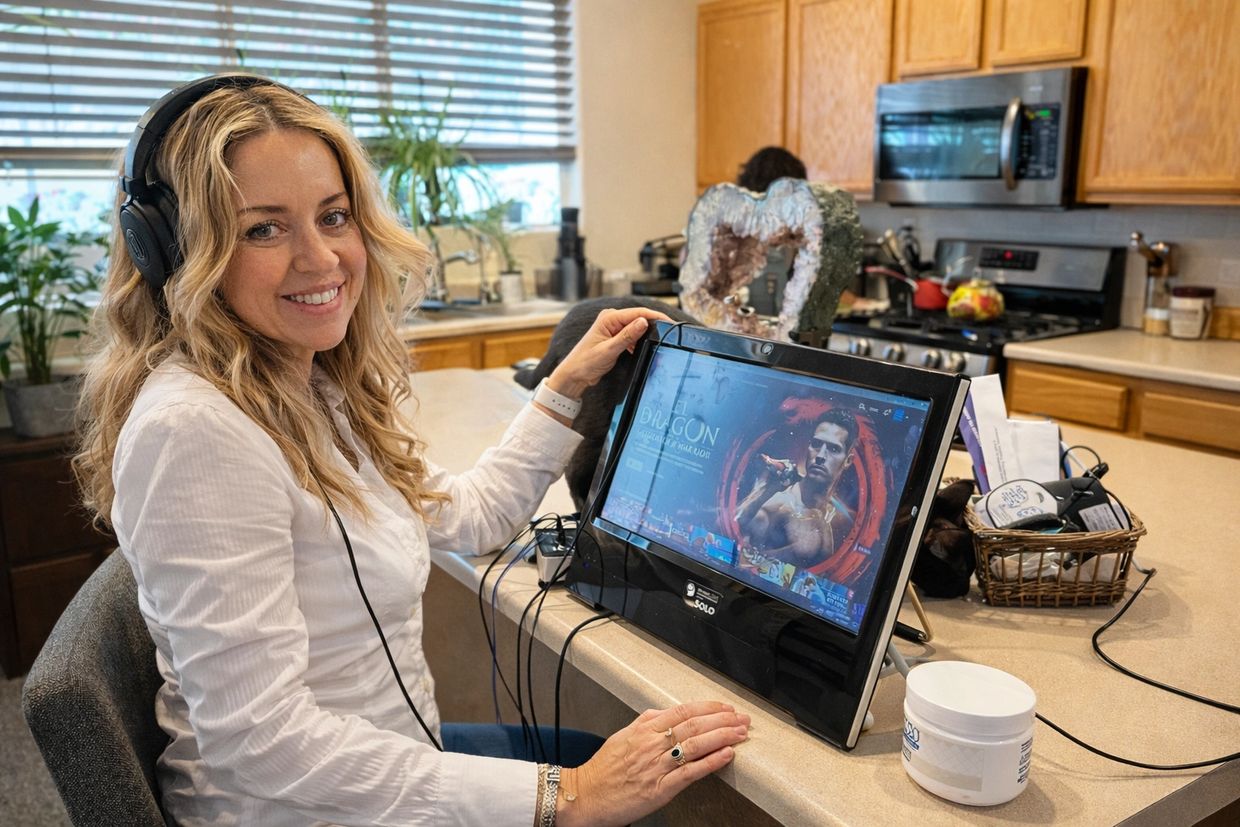
Training from home with neurofeedback
Training from home with neurofeedback

A QEEG (Quantitative Electroencephalogram), often called brain mapping, is like taking a snapshot of how your brain is functioning—not just how it looks, but how it works in real time.
What it actually is
It’s an advanced way of measuring your brain’s electrical activity using sensors placed on your scalp.
But unlike a regular EEG, a QEEG analyzes the data deeply and compares it to a large database of “typical” brain patterns.
Think of it like this.
This shows where your brain is balanced… and where it might be overworking or underworking.
How it works:
- Sensors are placed on your head (non-invasive, no pain).
- Your brain activity is recorded while you rest (eyes open/closed).
- The data is analyzed by software.
- You get a visual “map” of your brain, showing patterns of activity across different areas.
What it reveals:
A brain map can show things like:
- Areas of high activity (overthinking, mental overload)
- Areas of low activity (low focus, low energy)
- Imbalances in brainwave patterns (like too much fast activity or not enough calm waves)
- How well different parts of your brain are communicating
Why it matters:
This is where it becomes powerful—
A QEEG helps create a personalized roadmap.
Instead of guessing, it allows professionals to:
- Understand how your brain uniquely functions
- Design targeted neurofeedback training
- Track progress over time
In simple words:
🧠 A QEEG is like a mirror for your brain.
It doesn’t judge—it just shows you what’s happening, so you can train your mind to perform better, feel calmer, and function at its best.
Training from home with neurofeedback
Training from home with neurofeedback
Training from home with neurofeedback
After your brain map (QEEG) is done and your protocol is created, many providers offer the option to rent a neurofeedback system so you can continue your training from home.
Think of it as having your own personal brain-training setup, guided remotely by a professional.
How it works:
1. You receive the equipment
You’re provided with a kit that usually includes:
- A laptop or tablet with the software installed
- Sensors (small electrodes)
- Headband or wires
- Conductive paste/gel
Everything is designed to be simple and user-friendly.
2. Personalized setup (guided)
Your provider will:
- Program the system based on your brain map
- Show you exactly where to place the sensors
- Train you step-by-step (in person or via video call)
No guessing—you’re fully guided.
3. Your training sessions at home
You’ll sit comfortably and run a session that usually looks like:
- Watching a movie, listening to music, or playing a simple game
- The system reads your brain activity in real time
- When your brain moves toward a healthier pattern, the screen responds (brighter, smoother, clearer sound)
Your brain learns through this feedback—naturally, without effort.
4. Consistency is the magic
Most people train:
- 2–5 times per week
- 20–40 minutes per session
Over time, your brain begins to self-correct and hold better patterns even outside the sessions.
5. Ongoing support
You’re not alone in the process:
- Your provider tracks your progress
- Adjusts your protocol if needed
- Supports you through check-ins or virtual sessions
Why people love home training:
- Comfort → You’re in your own space
- Flexibility → Train on your schedule
- Consistency → Easier to stay committed
- Integration → Your brain learns in your real-life environment
The essence
This isn’t about forcing your brain to change—
it’s about teaching it a better rhythm, gently and consistently.
🧠 The more your brain practices balance, the more it becomes your natural state.
And the beautiful part?
You’re actively participating in becoming a more focused, calm, and elevated version of yourself.